
The Learning Technologies 2013 conference and exhibition was the biggest ever, so what does it tell us about learning technologies?
With the scale of the exhibition it is clear that Learning Technologies has become one of the leading – if not the leading – global learning tech shows. Learning tech is a hot market right now – this year there were more exhibitors with bigger stands – a point made by both Neil Lasher and Steve Rayson. With Cornerstone on Demand bringing 20-plus people it is clear the bigger US-based vendors are eyeing up the European market.
But what was on offer? Well, similar things really. Most vendors can now provide a suite of tools across all channels and that is a challenge for them and a potential headache for their customers. Where is the differentiation and why should an organisation choose one vendor over another, especially when they are offering similar tools and services, from mobile and social to rapid authoring tools?
Mobile was a hot topic but that doesn’t mean to say organisations are implementing it or vendors are providing what organisations might need. Take for example the GoodPractice poll of exhibition delegates which showed 65% would not be taking up mobile learning in the coming year.
Or take a look at learning technolgies manager Craig Taylor’s review of a talk he had with a vendor about a mobile solution – he wanted to talk about how a mobile solution could use the native features of a smartphone, something the vendor – in this case Certpoint – doesn’t currently offer.
So, L&D teams are interested in mobile but few are taking the plunge and vendors are still approaching mobile as a push channel for content.
There was talk of the Tin can API but no one seems to have much to share on this currently although much like mobile there is a lot of interest – Lasher says he saw two vendors talking about it.
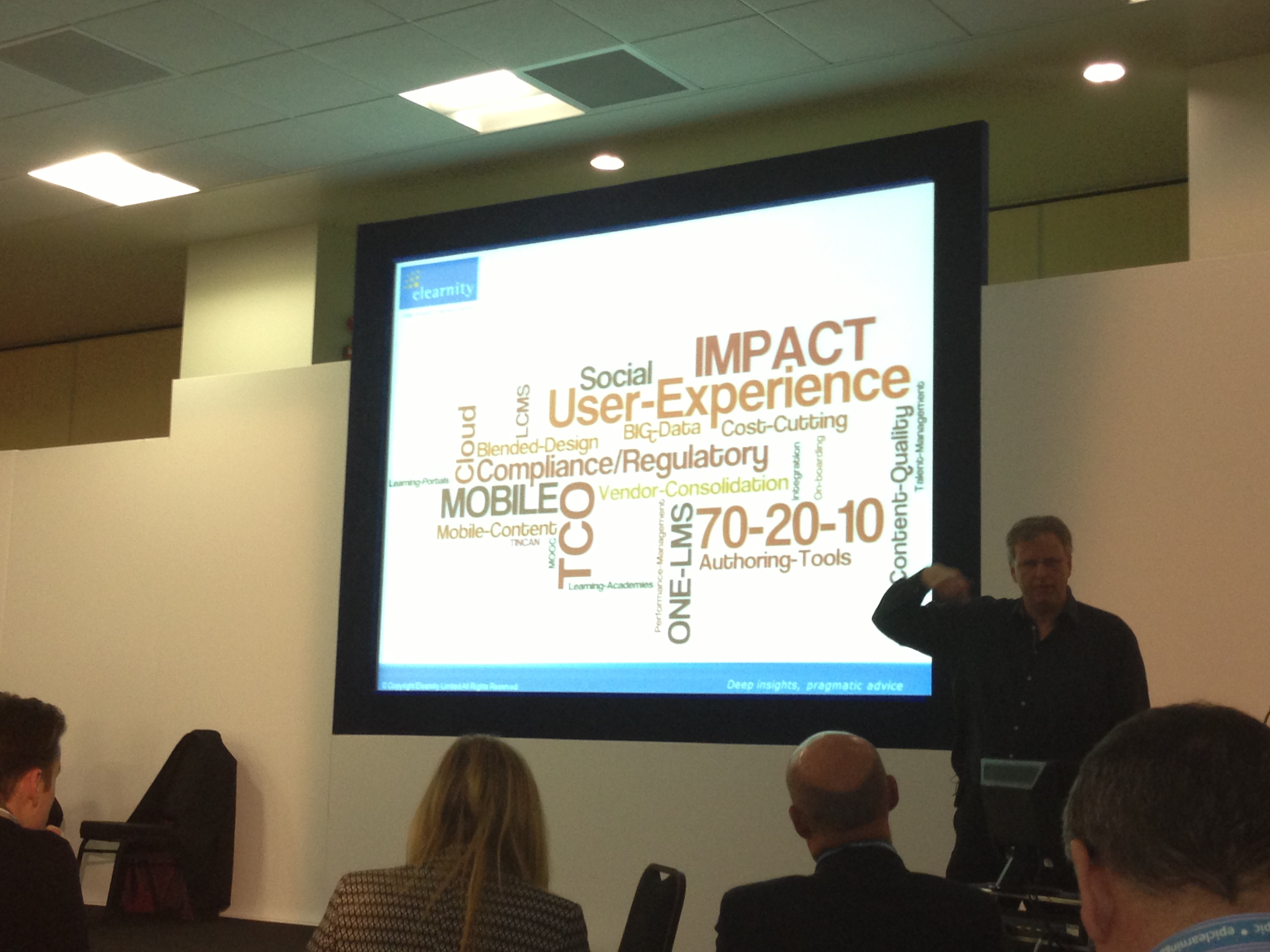
Upstairs in the conference, David Wilson from analyst Elearnity ran a live Q&A session on what he called tech ‘headbang’ issues – the things that are annoying about learning and talent management systems. They created a Twitter hashtag for the event, some of the tweets from which you can see below. They give a flavour of where the here and now discussions are on learning tech.
Mobile and software as a service are being talked about, as is the impact of bring your own device to work – user experience remains a thorny issue too. However, for many organisations the challenge is how to optimise current learning management systems to do more for the learners and provide better data for the organisation.
Businesses are interested in mobile learning but don’t really have a strategy for using it. #true #LT13uk #lt13headbang
— John Haynes (@Haynesweb) January 29, 2013
“@kategraham23: Hardly anyone in the room is running a SaaS system – that’s really surprised me! #lt13headbang #LT13UK #t4s2” it will change
— Denise Hudson Lawson (@DHL66) January 29, 2013
What is the role that mobile will really play in eLearning? Just accessing content or also interactively assessing students? #LT13headbang
— Philippa Eady (@FLUXGirl) January 29, 2013
How do you know which LMS is best for your company? What are the true KPIs when choosing? #LT13Headbang
— John Baumback (@JohnECB) January 29, 2013
At one point in the Elearnity session a delegate was asking for a list of the best vendors for a learning platform. The exchange summed up some of the tensions within learning technology – organisations are looking for the best ways to implement learning and have a need for good quality information. Meanwhile, vendors have a challenge in differentiating themselves in an increasingly crowded marketplace.
I’ll leave the last word – or should I say tweet – to David Wilson, who says the choice of tech comes down to organisational need.
@dwil23 says too hard to classify learning systems providers like this as it depends on your orgs needs #lt13headbang #LT13UK #t4s2
— kategraham23 (@kategraham23) January 29, 2013
And you can see more tweets from the analyst Q&A here.
Let us know your thoughts on the show.